Glitching Orbits: Visualizing 9,115 Satellites
Single Channel Video, 60-second
Commissioned by Indianapolis International Airport
"Glitching Orbits" is an abstract data visualization video portraying the complex and crowded web of 9,115 satellites orbiting Earth. Utilizing glitch aesthetics, the artwork transforms raw satellite data into a mesmerizing visual experience that reflects the astonishment and the chaos of human-made objects in space.
The video focuses on themes of technological saturation and the unintended consequences of progress. The glitches represent disruptions and anomalies, symbolizing potential collisions, malfunctions, or the cascading problem of space debris. By abstracting the satellites into visual distortions, the piece highlights the fragile balance between innovation and the sustainability of our orbital environment.
This installation invites viewers to consider the invisible layers of human influence extending beyond our planet. It raises critical questions about responsibility and the long-term implications of our expanding digital infrastructure in space. "Glitching Orbits" encourages dialogue on navigating the intersection of advancement and preservation in the future.


Aftermath Of The Climate Crisis: Derinkuyu Revived
Video Installation, 4K Single-Channel Digital Video Animation Loops with Music, 2024
Duration: 7 minutes 04 seconds
Funded by,
DeHaan Artist of Distinction Award by The Christel DeHaan Family Foundation and Indy Arts Council,
Frank C. Springer Family Innovative Faculty Award by Indiana University Indianapolis Herron School of Art and Design
Awarded by,
Art-X Gallery Art Innovation Award
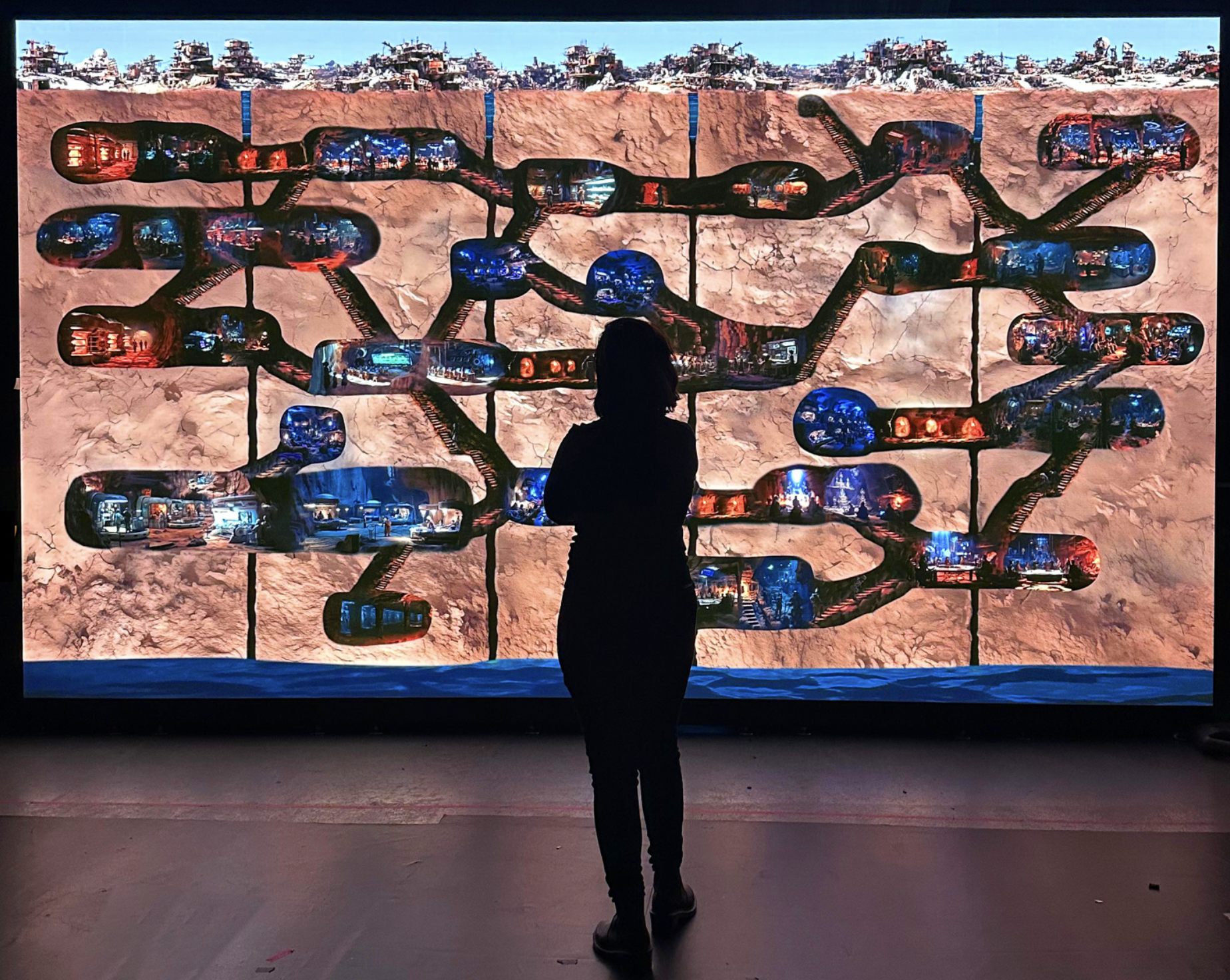
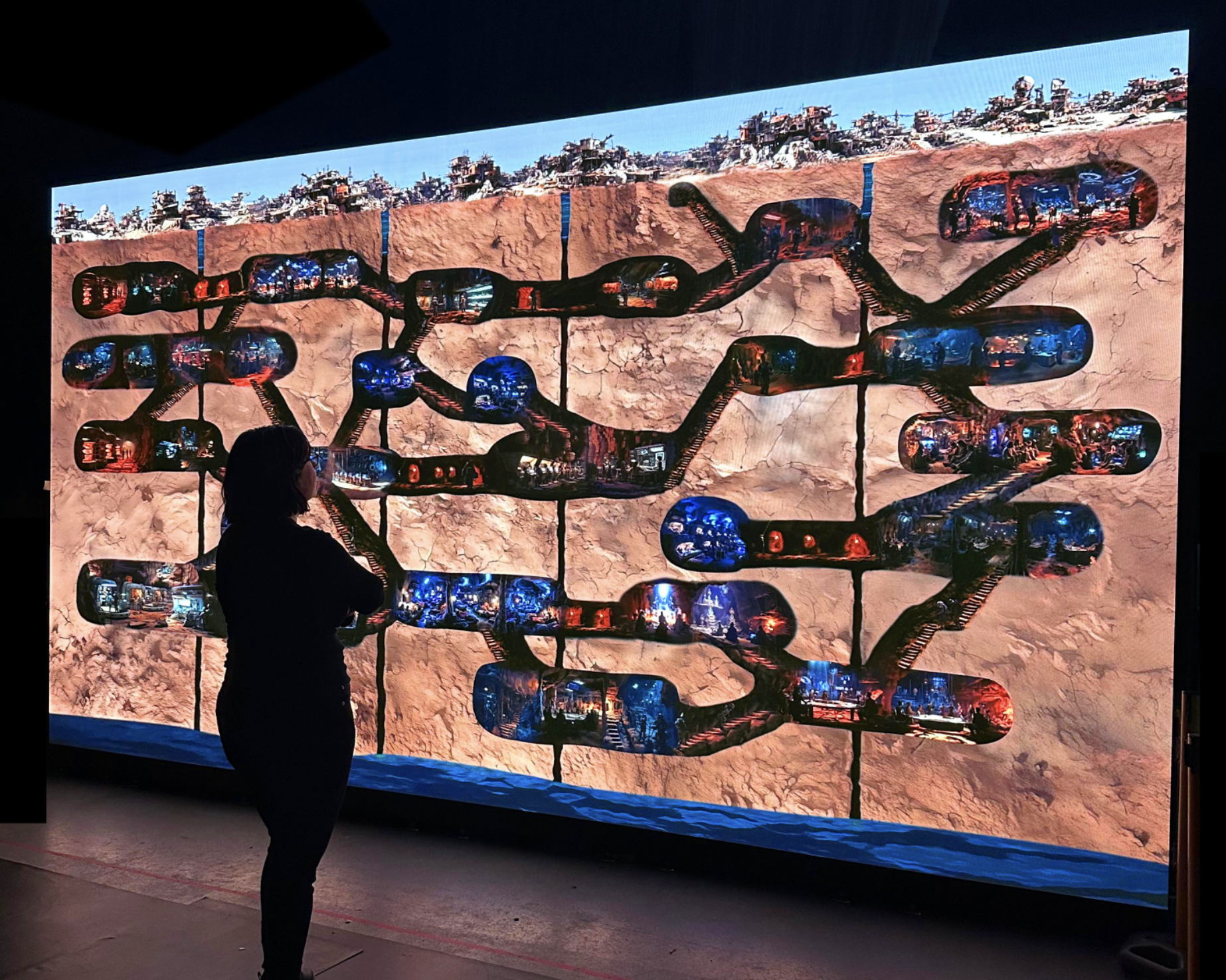
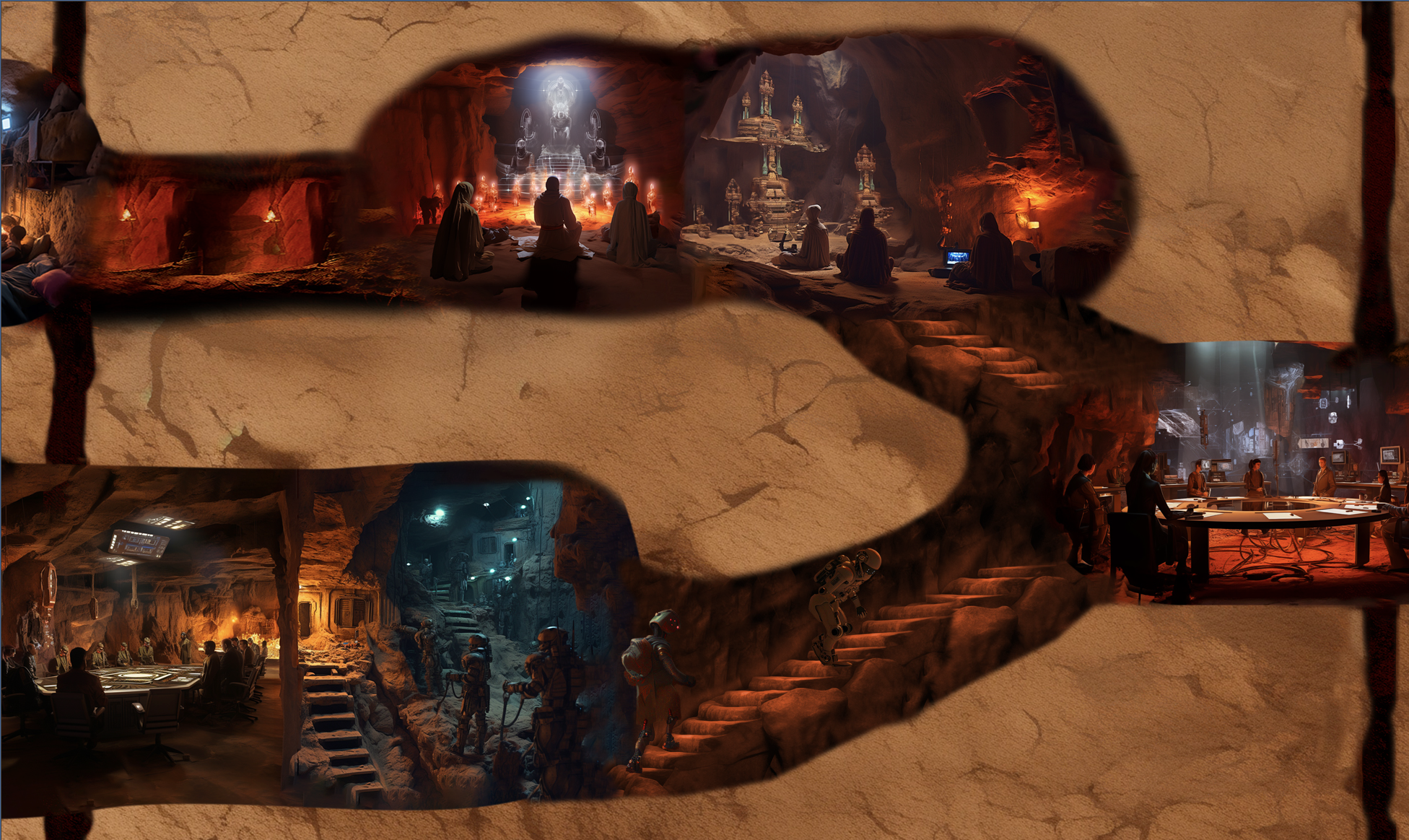
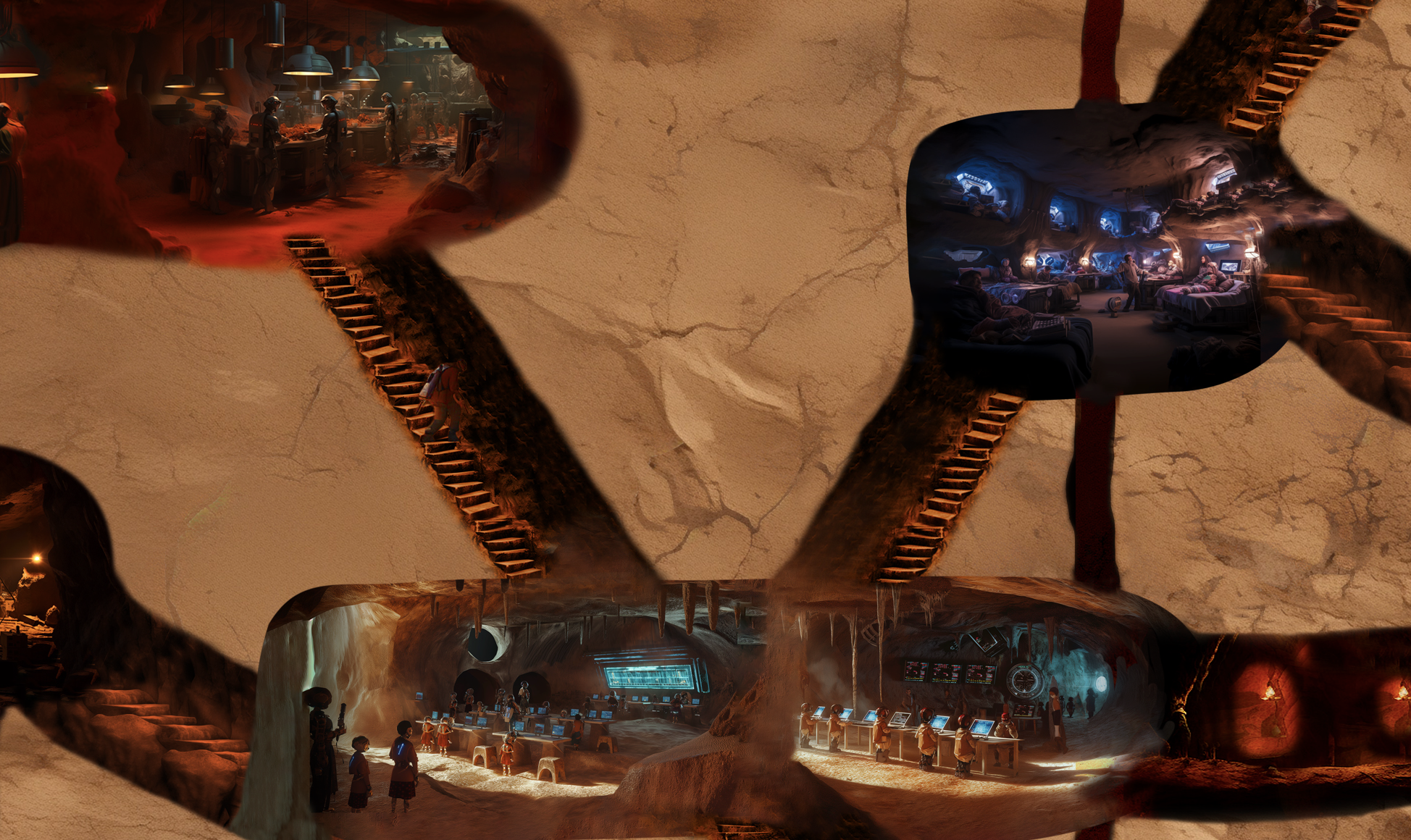
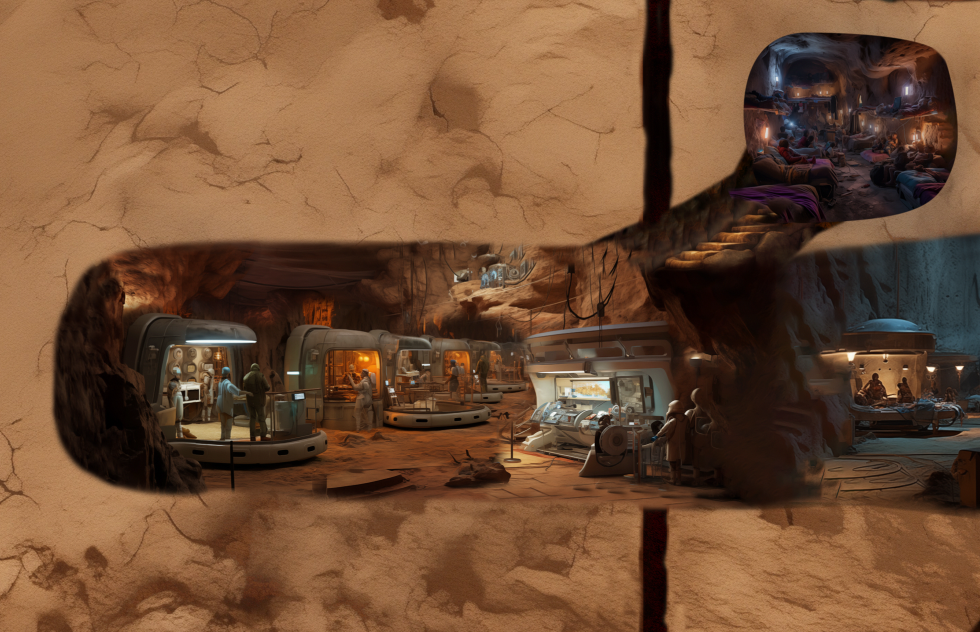
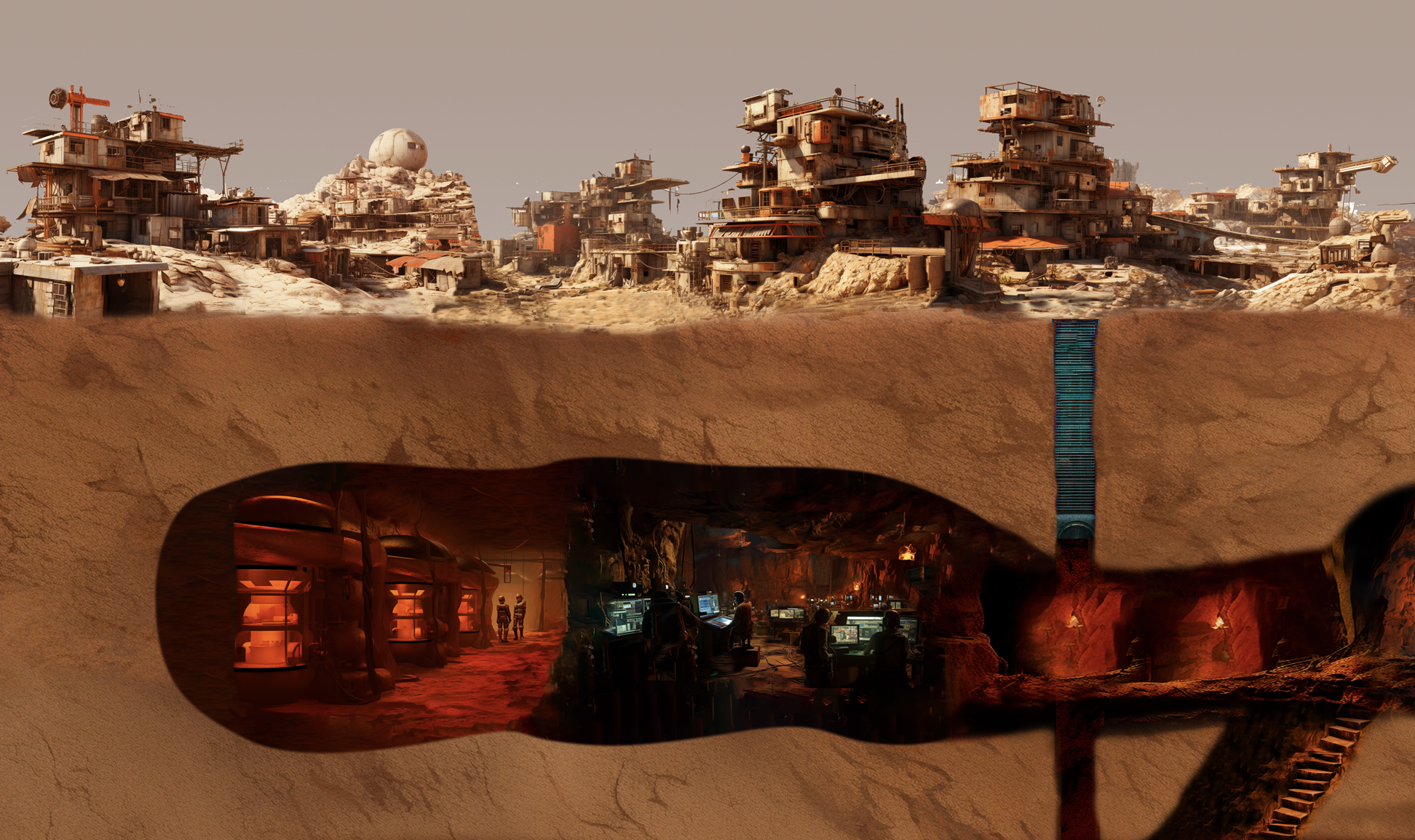
![]() The climate crisis, the real apocalypse, is here. Climate change affects the entire interconnected system of the Earth, leading to various consequences. Around 2800 years ago, the inhabitants of the Cappadocia area, Türkiye, made a crucial decision due to the harsh conditions they faced, including severe weather and the constant fear of conflict. They opted to construct a complete Derinkuyu underground city, which remains the oldest and the biggest surviving underground city, accommodating approximately 20,000 residents and offering schools, residences, markets, and places of worship. I reimagine this city for how we can scientifically imagine it during the climate crisis and how humans would live in underground cities using scientific facts and science fiction in the future. I focus on representing these concepts using technology (animated computer-generated loops and/or sound and 3D/2D visualizations). I aim to revisit the past, ancient underground cities in Cappadocia, examine how people lived and survived together, imagine and apply these for the future, and understand how ancient underground city inhabitants can help us to survive and build our future lives. I address the problem of climate change and its effects on our planet. 25,000 Gen A.I. images were created, collected, collaged, synthesized, and processed for this project, and these were animated and created 42 animated scenes. Music composition was another integral part of the project. During my research, the traditional Duduk, an ancient wind instrument, combined its historical sound with futuristic analog synthesizers. This fusion of past and future elements echoed the visual themes of the video, further immersing the viewer in the speculative narrative I had crafted.
The climate crisis, the real apocalypse, is here. Climate change affects the entire interconnected system of the Earth, leading to various consequences. Around 2800 years ago, the inhabitants of the Cappadocia area, Türkiye, made a crucial decision due to the harsh conditions they faced, including severe weather and the constant fear of conflict. They opted to construct a complete Derinkuyu underground city, which remains the oldest and the biggest surviving underground city, accommodating approximately 20,000 residents and offering schools, residences, markets, and places of worship. I reimagine this city for how we can scientifically imagine it during the climate crisis and how humans would live in underground cities using scientific facts and science fiction in the future. I focus on representing these concepts using technology (animated computer-generated loops and/or sound and 3D/2D visualizations). I aim to revisit the past, ancient underground cities in Cappadocia, examine how people lived and survived together, imagine and apply these for the future, and understand how ancient underground city inhabitants can help us to survive and build our future lives. I address the problem of climate change and its effects on our planet. 25,000 Gen A.I. images were created, collected, collaged, synthesized, and processed for this project, and these were animated and created 42 animated scenes. Music composition was another integral part of the project. During my research, the traditional Duduk, an ancient wind instrument, combined its historical sound with futuristic analog synthesizers. This fusion of past and future elements echoed the visual themes of the video, further immersing the viewer in the speculative narrative I had crafted.
Video Installation, 4K Single-Channel Digital Video Animation Loops with Music, 2024
Duration: 7 minutes 04 seconds
Funded by,
DeHaan Artist of Distinction Award by The Christel DeHaan Family Foundation and Indy Arts Council,
Frank C. Springer Family Innovative Faculty Award by Indiana University Indianapolis Herron School of Art and Design
Awarded by,
Art-X Gallery Art Innovation Award
 The climate crisis, the real apocalypse, is here. Climate change affects the entire interconnected system of the Earth, leading to various consequences. Around 2800 years ago, the inhabitants of the Cappadocia area, Türkiye, made a crucial decision due to the harsh conditions they faced, including severe weather and the constant fear of conflict. They opted to construct a complete Derinkuyu underground city, which remains the oldest and the biggest surviving underground city, accommodating approximately 20,000 residents and offering schools, residences, markets, and places of worship. I reimagine this city for how we can scientifically imagine it during the climate crisis and how humans would live in underground cities using scientific facts and science fiction in the future. I focus on representing these concepts using technology (animated computer-generated loops and/or sound and 3D/2D visualizations). I aim to revisit the past, ancient underground cities in Cappadocia, examine how people lived and survived together, imagine and apply these for the future, and understand how ancient underground city inhabitants can help us to survive and build our future lives. I address the problem of climate change and its effects on our planet. 25,000 Gen A.I. images were created, collected, collaged, synthesized, and processed for this project, and these were animated and created 42 animated scenes. Music composition was another integral part of the project. During my research, the traditional Duduk, an ancient wind instrument, combined its historical sound with futuristic analog synthesizers. This fusion of past and future elements echoed the visual themes of the video, further immersing the viewer in the speculative narrative I had crafted.
 Research and Background
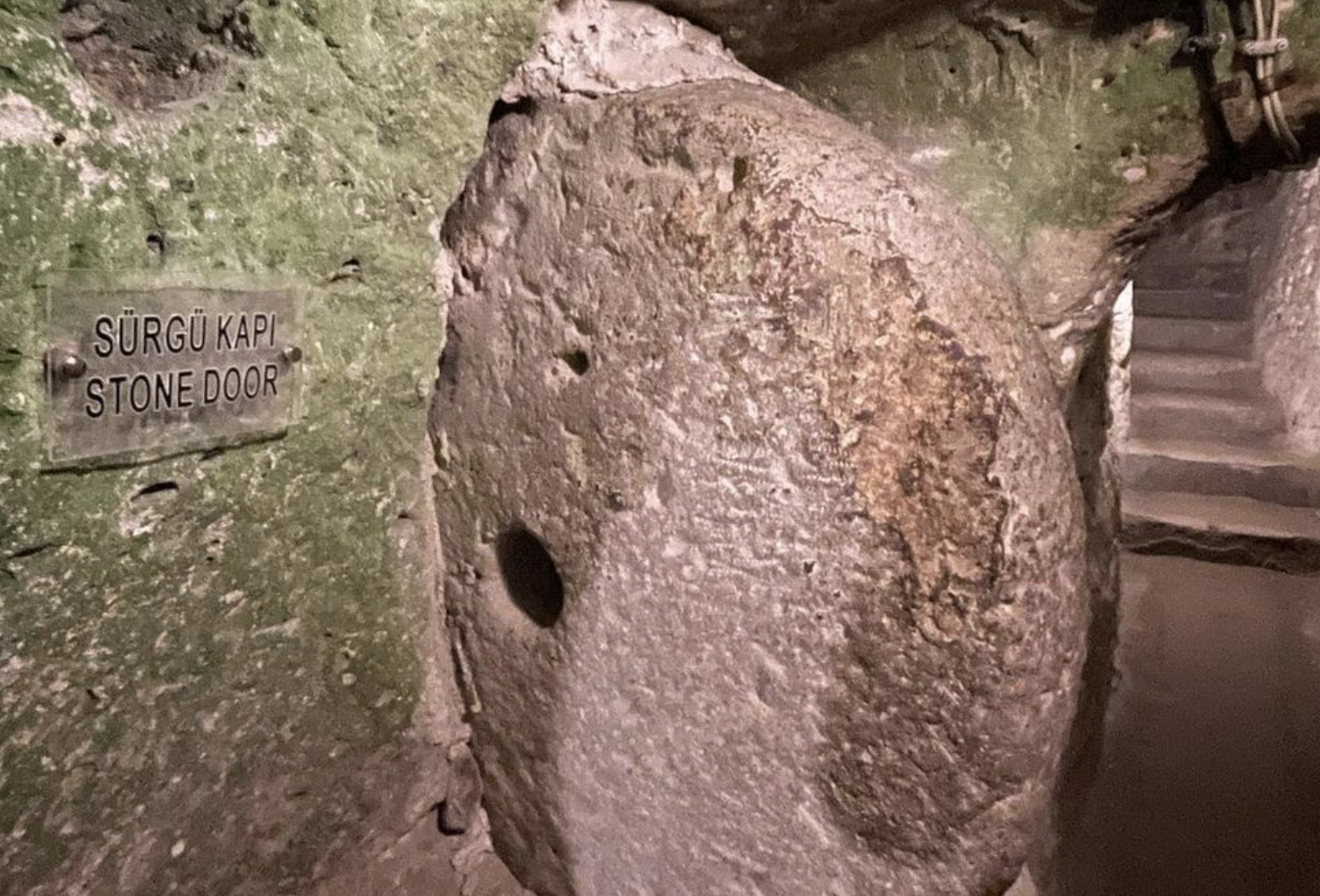
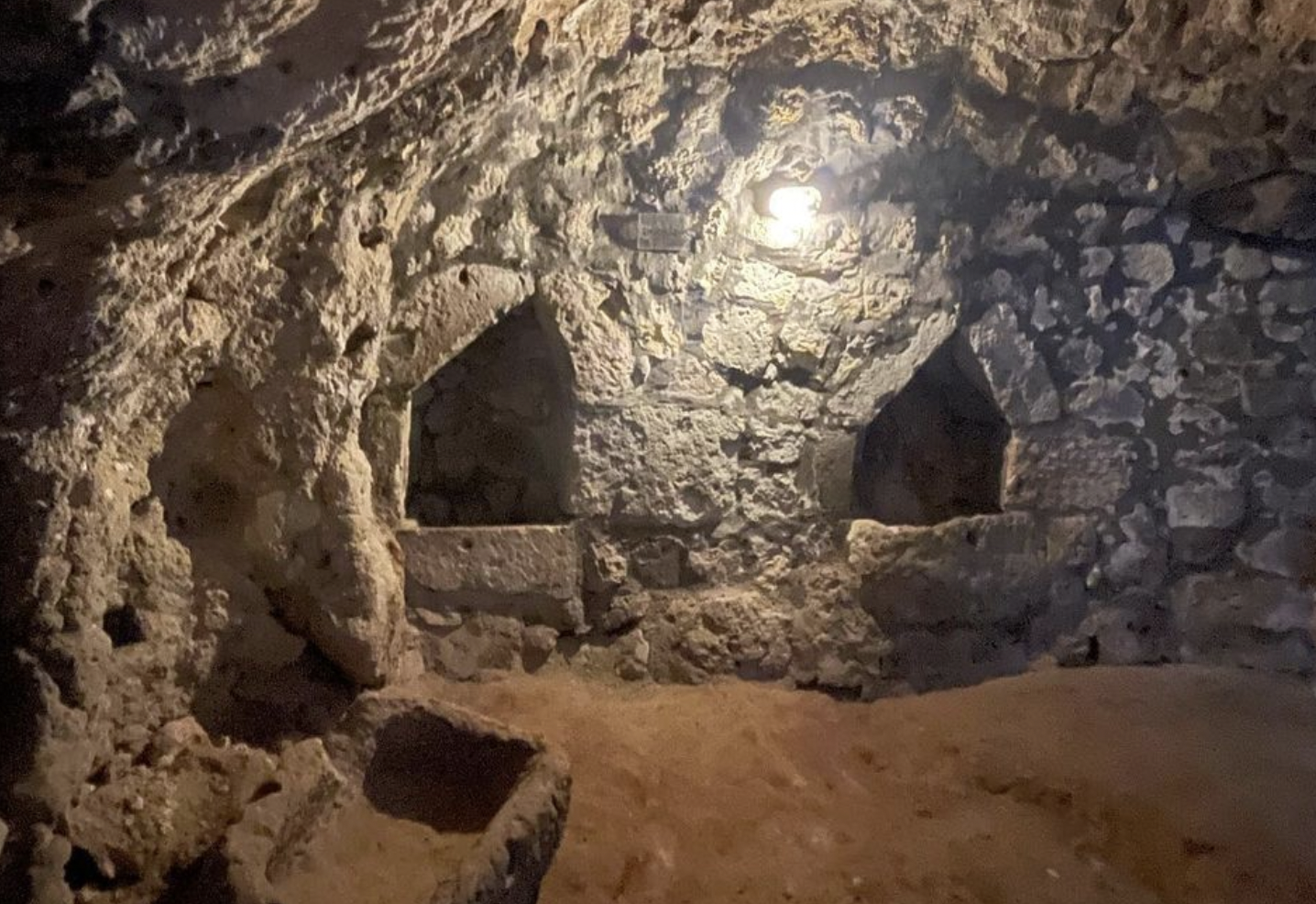
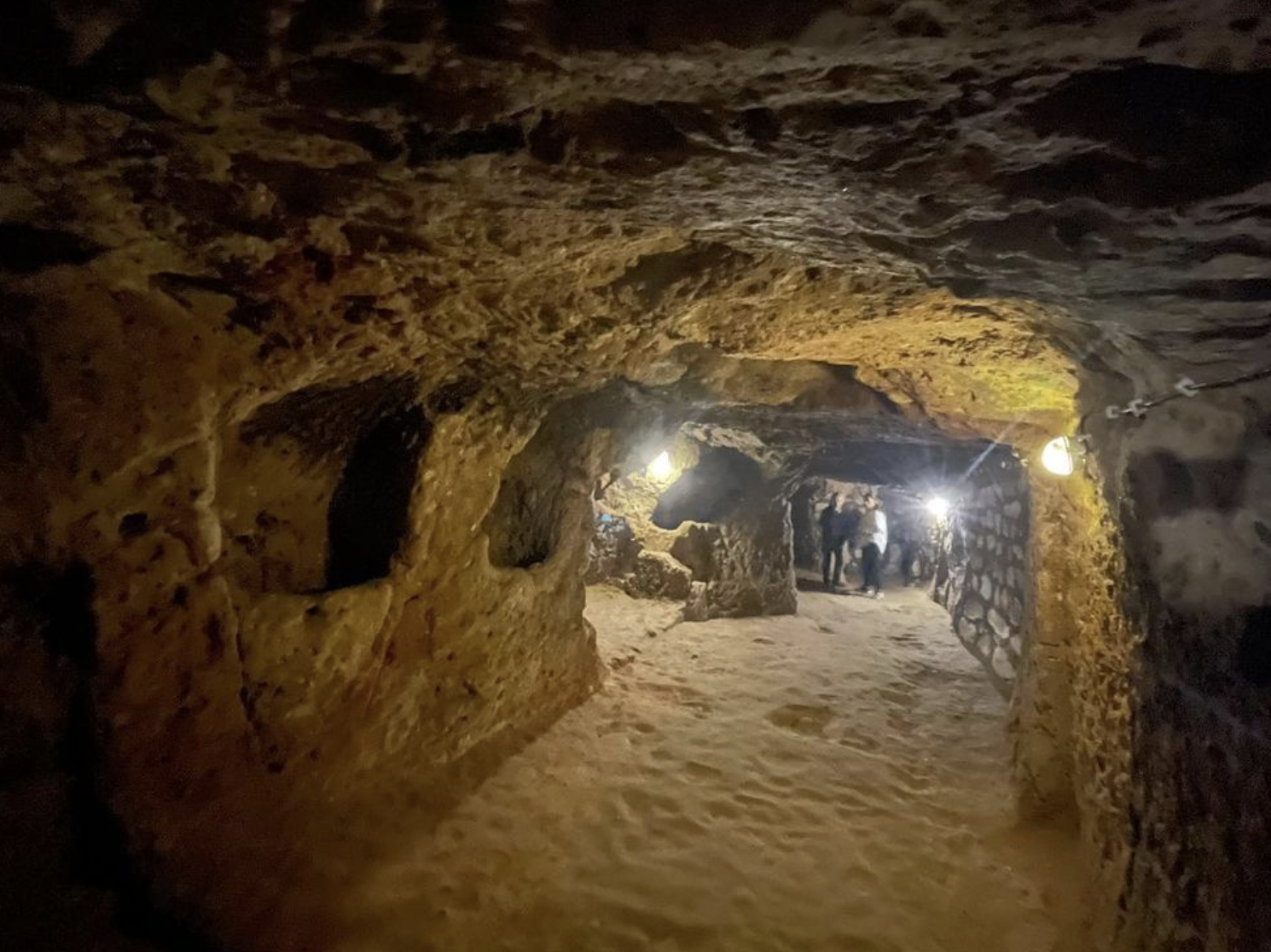
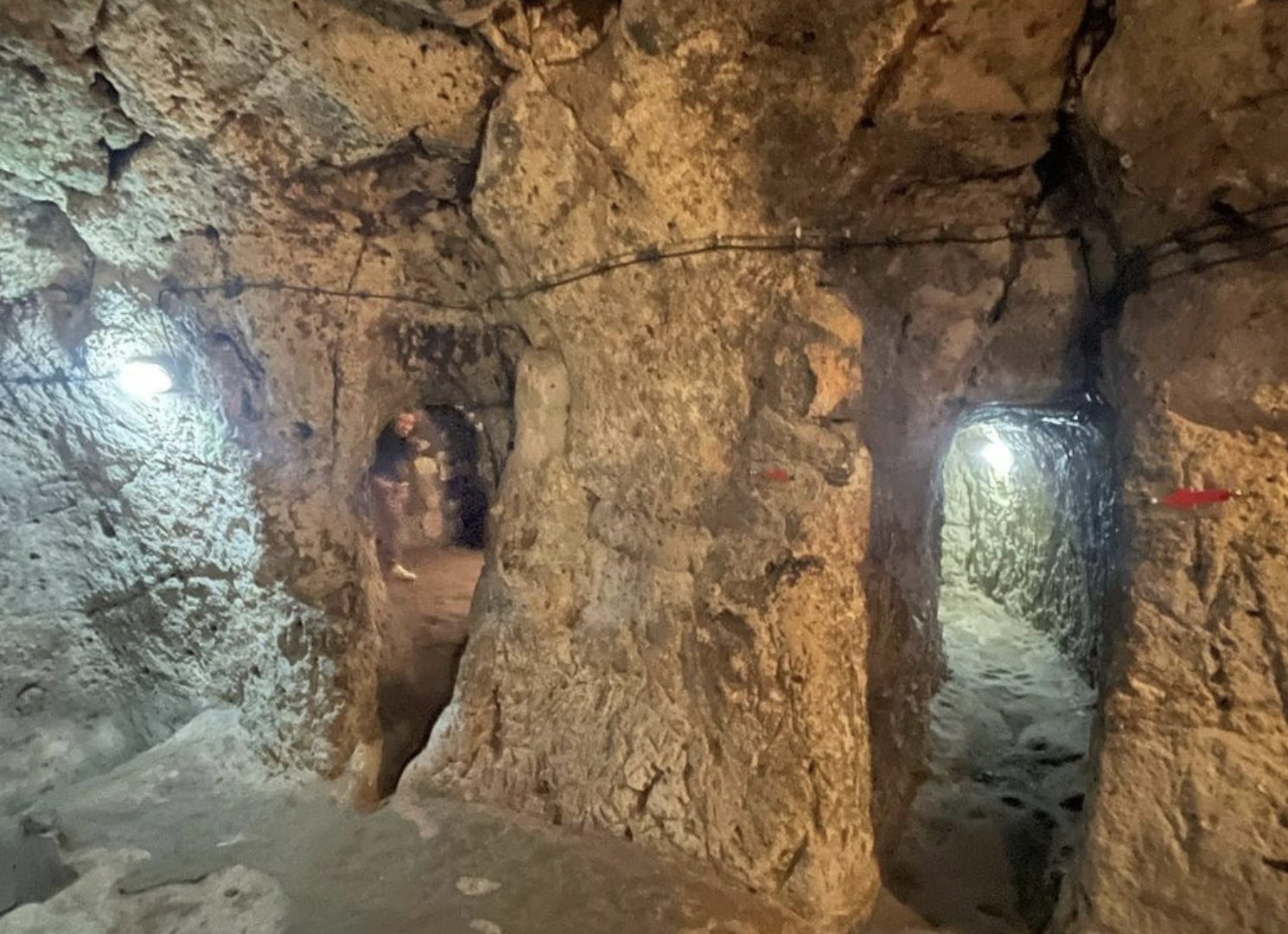
Climate change affects the entire interconnected system of the Earth, leading to various consequences. These include severe droughts, water scarcity, intense wildfires, rising sea levels, floods, polar ice melting, extreme storms, and declining biodiversity. Scientists claim that it causes further irreversible damage to our ecosystems and makes the world's surface inhabitable. The rising sea levels and the heat will vanish our cities. Around 2800 years ago, the inhabitants of the Cappadocia area, Türkiye, made a crucial decision due to the harsh conditions they faced, including severe weather and the constant fear of conflict. Derinkuyu is the most excavated underground city in the world, accommodating approximately 20,000 residents and offering schools, residences, markets, and places of worship. Because of the secrecy, there is no public entrance to the city, and it has more than 600 entrances within homes leading to the subterrestrial city of Derinkuyu. The first inhabitants, Pyrigians, carved the first couple of levels, then Persians, Romans (Greeks), Christians, Armenians, and Ottomans extended and created this huge underground city for centuries. In 1985, the region was added to the Unesco World Heritage list.
Project Concept
I rethink the biggest ancient underground city, ancient technologies, and ancient lifestyles to imagine the future. I aim to indicate how humans can survive crises and learn from their mistakes. I propose to indicate how environmental factors and technological developments can change our culture, especially our daily lives and communication, as a semi-science fiction story in which I believe our adaptation skills are strong enough to survive in any circumstances. I intend to investigate the benefits and risks of technology in the future and convey the possibilities and fictional concepts. By imagining the future, I intend to increase conversations and active involvement with ancient civilizations and future communities to connect the past, present, and future culturally and socially. I propose how our past daily practices in various cultures and communities could help us predict the future during tremendous crises such as climate crises. For instance, Derinkuyu Underground City is mainly organized around four main vertical ventilation shafts and approximately 50,000 ancillary ventilation channels, which were also used to communicate with people on different levels of the city. Ancient people used these ventilation channels to survive while hiding from incursions. I plan to record whispers in ancient Persian, Phrygian, and ancient Greek languages to recreate how these ancient civilizations communicated in underground cities.
In addition to that, this artwork allows me to explore its inhabitants' cultural and social aspects. This focuses on the understanding of their survival strategies and how they communicate inside the city. Derinkuyu served as a refuge during times of warfare and persecution, highlighting the resourcefulness and adaptability of ancient communities in the face of adversity. This knowledge can offer lessons for contemporary and future disaster preparedness and resilience, especially during the climate crises in the near future when the earth's surface becomes inhabitable. The Derinkuyu ancient underground city research project holds significant importance for various fields of study in contemporary society and our future during the climate crisis. The underground city's construction techniques are still inspiring today.
30-Second Excerpt:
 *Layout-Representation
Production Process
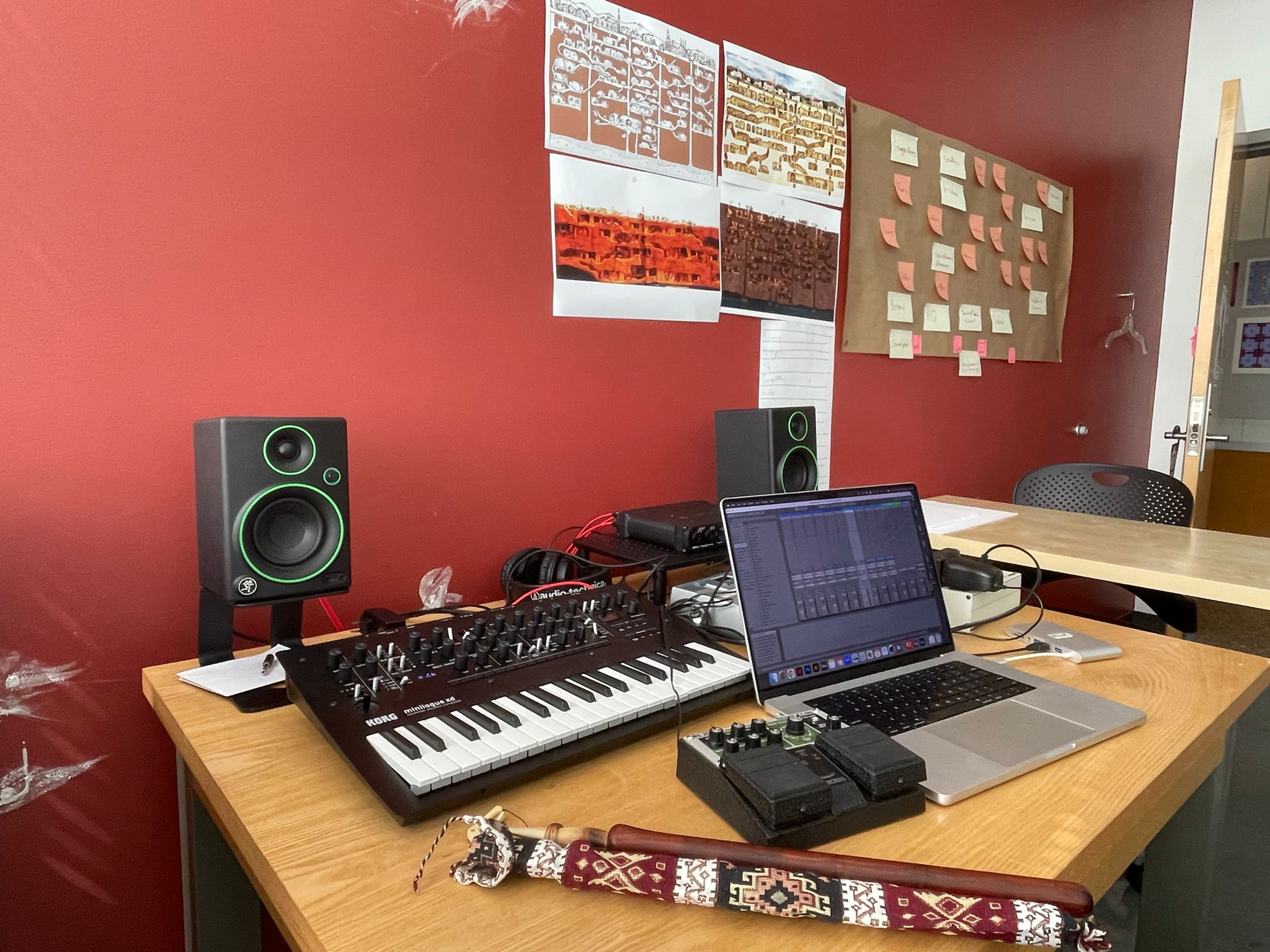
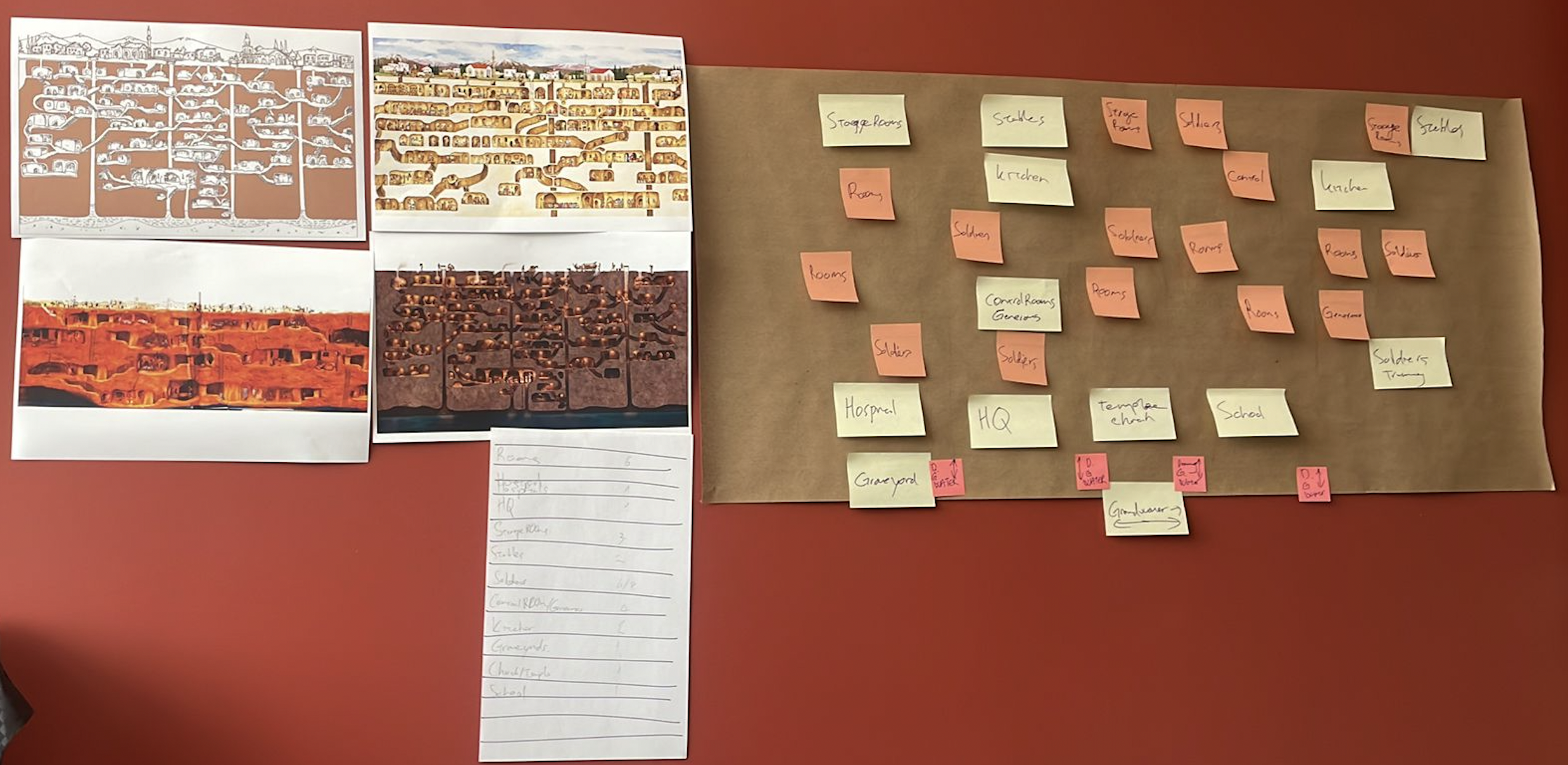
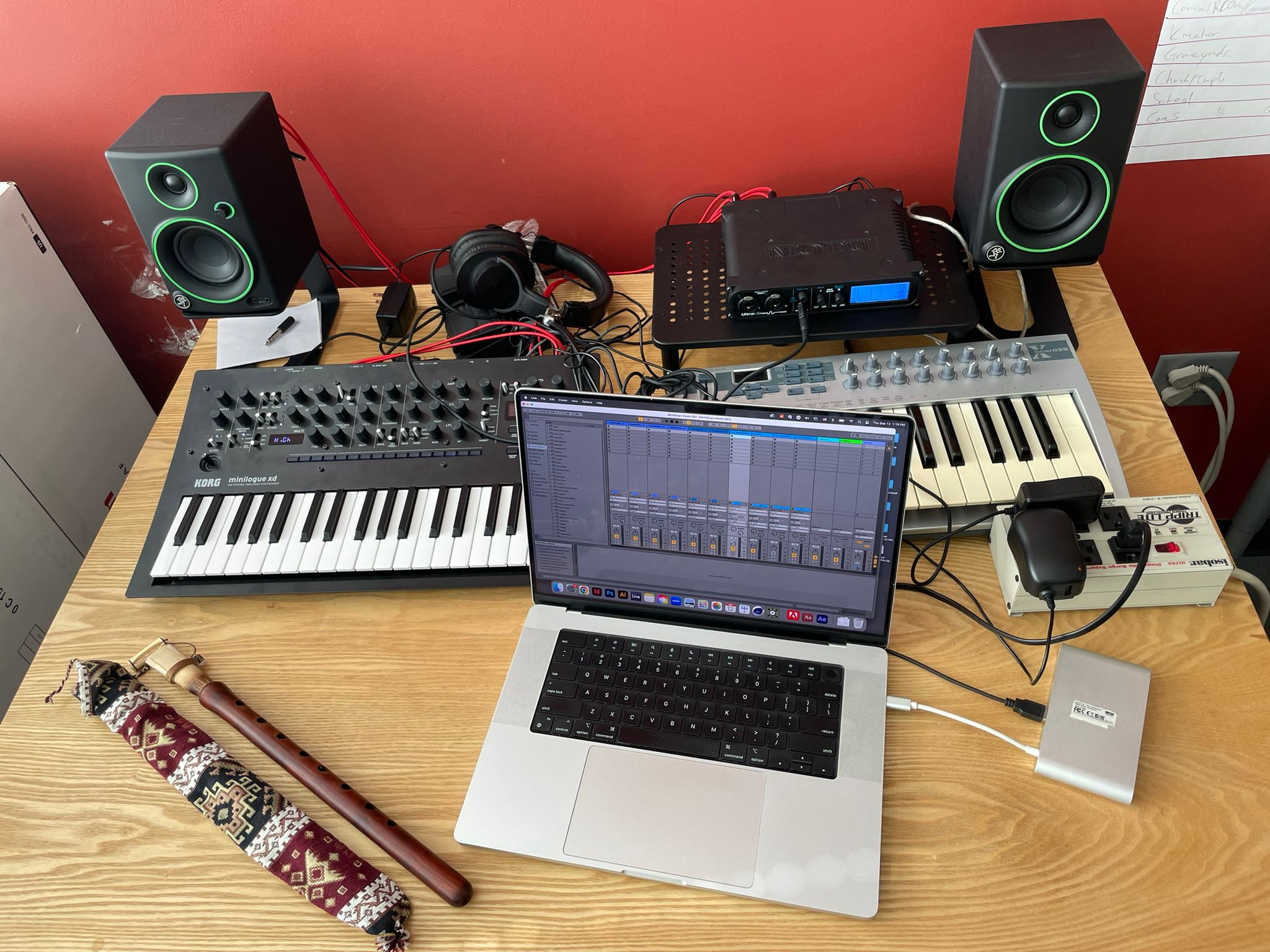
Installation
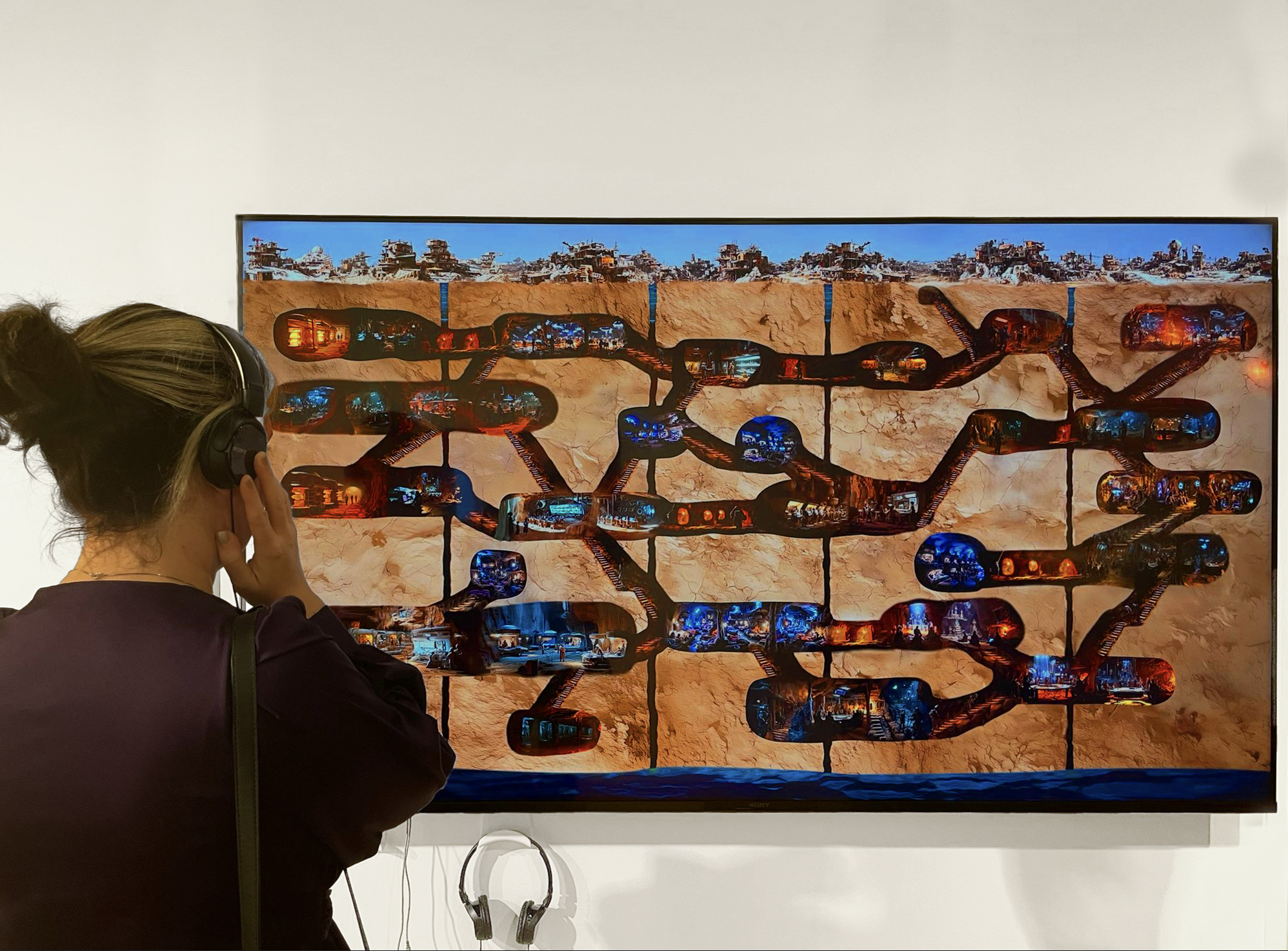
Project Details
Video Installation, 4K Three-Channel Digital Video Animations Loops
6912x4094 px.
2023.
Bilsart Shop
Gürkan Maruf Mıhçı reimagines Hieronymus Bosch’s The Garden of Earthly Delights triptych painting in the light of artificial intelligence and science fiction. He uses Artificial Intelligence tools to create a futuristic animated version of the artwork. The left panel (garden of Eden) and the right panel (hell) depict the end of the world. His imaginary world is earthly, but what if we extend his concept to the galaxy? The central panel represents a landscape of fantastical creatures and human figures. However, how can we imagine the end of the world scientifically and a landscape of imaginary futuristic galactic worlds? How can we represent these concepts using technology (animated computer-generated loops - Artificial Intelligence generated and/or 3D/2D visualizations- on the triptych Led Screens)?
-
Monoco.IO, Bilsart, Istanbul, Türkiye
Agitator, Chicago, IL, US
Miami New Media Festival, Miami, FL, US
Bilsart Shop
Gürkan Maruf Mıhçı reimagines Hieronymus Bosch’s The Garden of Earthly Delights triptych painting in the light of artificial intelligence and science fiction. He uses Artificial Intelligence tools to create a futuristic animated version of the artwork. The left panel (garden of Eden) and the right panel (hell) depict the end of the world. His imaginary world is earthly, but what if we extend his concept to the galaxy? The central panel represents a landscape of fantastical creatures and human figures. However, how can we imagine the end of the world scientifically and a landscape of imaginary futuristic galactic worlds? How can we represent these concepts using technology (animated computer-generated loops - Artificial Intelligence generated and/or 3D/2D visualizations- on the triptych Led Screens)?
-
Monoco.IO, Bilsart, Istanbul, Türkiye
Agitator, Chicago, IL, US
Miami New Media Festival, Miami, FL, US
The Garden of Galactic Delights


15-minute audio-visual live performance at the 2023 WFAE Conference, Atlantic Center for the Arts, FL.
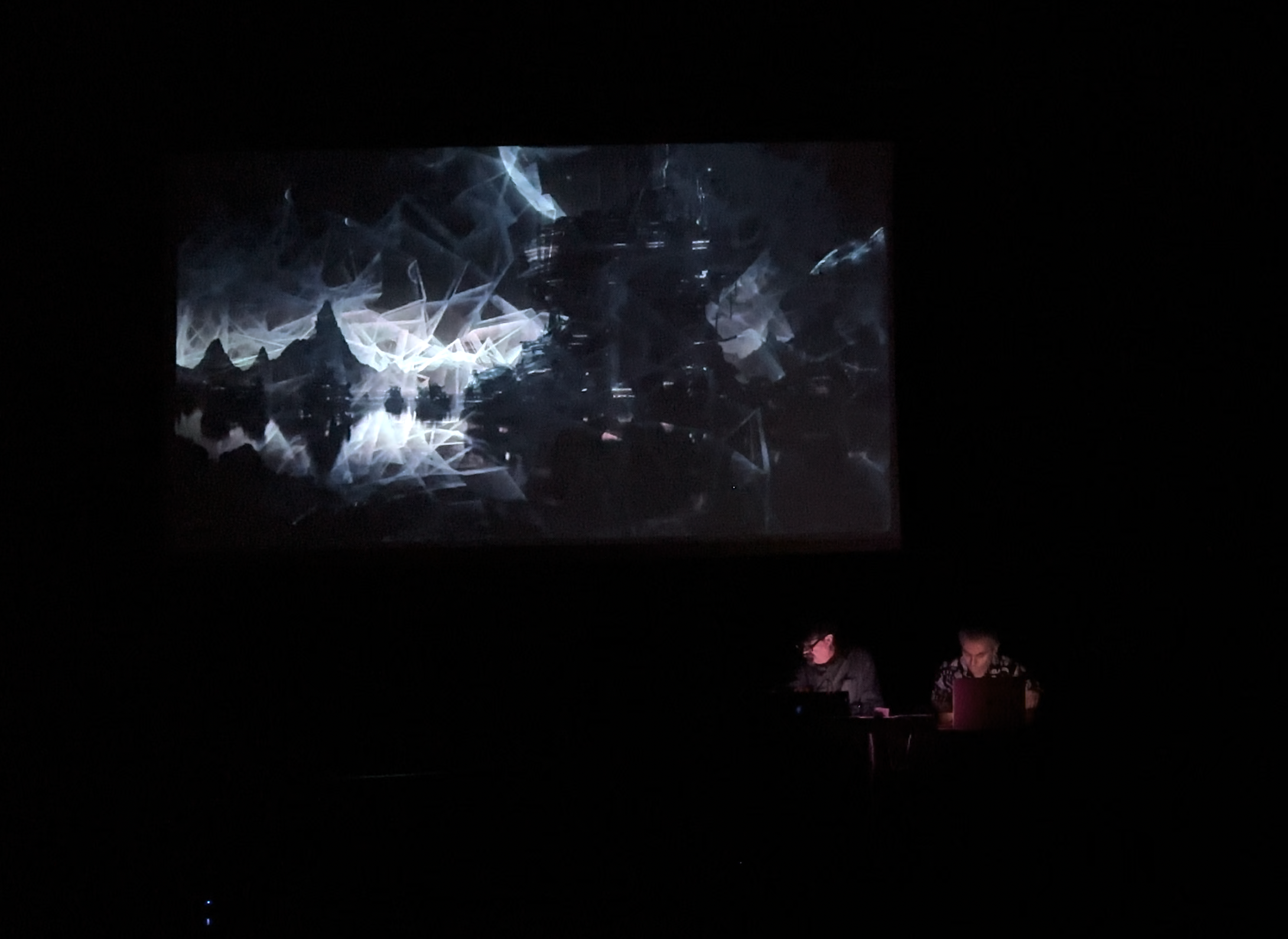
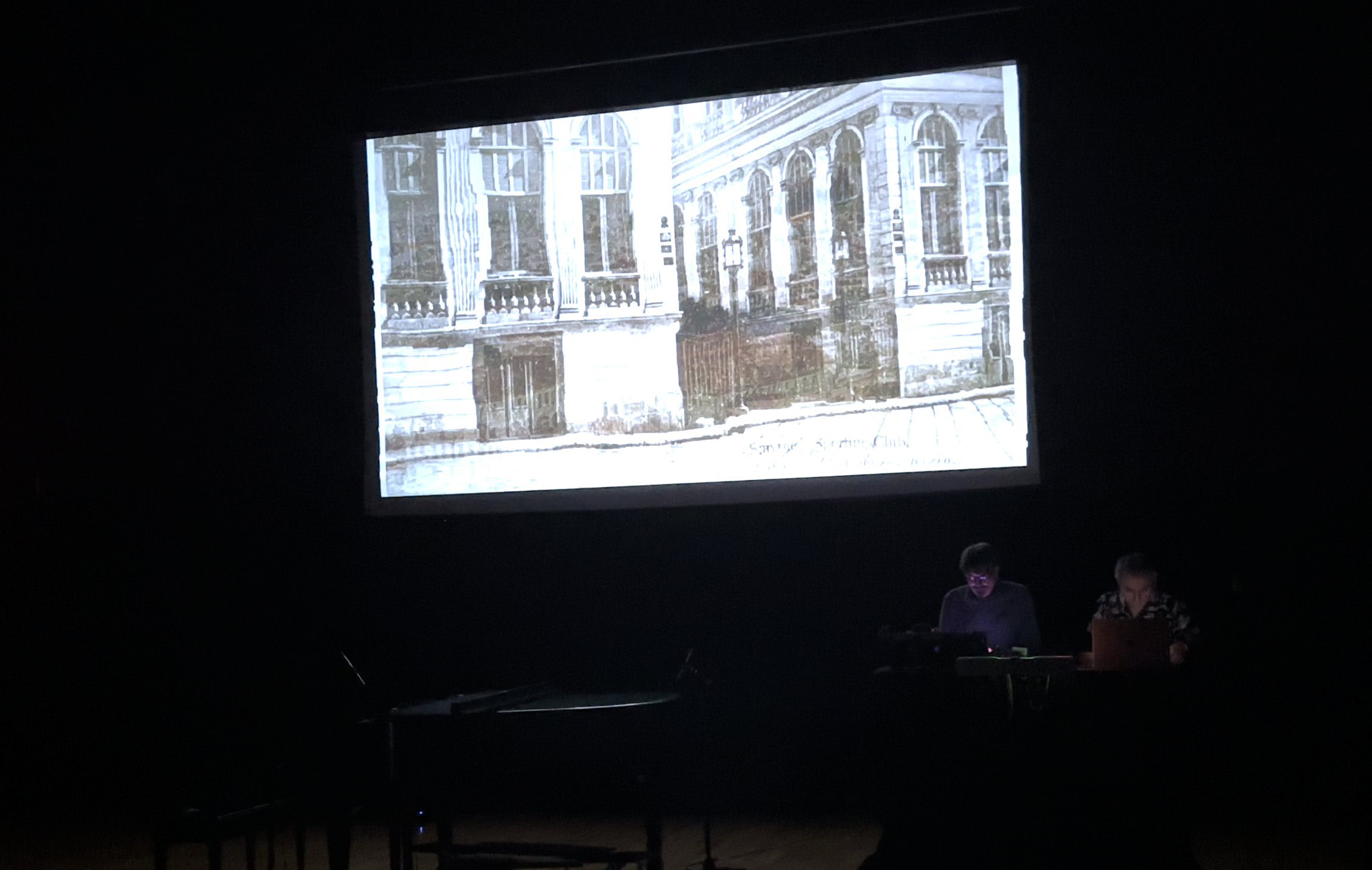
This 15-minute audio-visual performance aims to create sonic relationships between Old, New, and Cyber Smyrna. It focuses on past, present, and future relationships between cities and their history.
The founder of New Smyrna, Dr. Andrew Turnbull, gave his spouse’s birthplace, the Ottoman city of Smyrna (modern-day İzmir in Turkey), and named the settlement in honor of his wife's birthplace in the late 1700s. However, İzmir’s (Old Smyrna's) history is deeper than New Smyrna's. İzmir has 8500 years of history since the Neolithic period. Many civilizations were held in İzmir, but Greek and Turkish cultures are still effective today.
This 15-minute audio-visual performance aims to create sonic relationships between Old and New Smyrna. It focuses on past, present, and future relationships between cities and their history. This performance creates virtual connections between cultures. As Turkish and American citizens, Gürkan Maruf Mıhçı and Chad Eby will use field recordings and found sounds from İzmir and New Smyrna to create an acoustic connection between both cities. They will also compose these field recordings with ambient sounds during the improvised performance.
Also, they use visuals (photos and ancient illustrations) and videos from both cities and merge them to create a visual connection between the two cultures. These visuals also reflect the rich history of Old Smyrna and Izmir, so the performance aims to look back at how landscape and soundscape have changed and affected both cities. This performance imagines the future of Smyrna on other planets to project the future of Smyrna. The artificial intelligence algorithm generated cyber Smyrna images. This performance merges the cultures in İzmir, Old, and New Smyrna and re-images the past, present, and future.
This 15-minute audio-visual performance aims to create sonic relationships between Old, New, and Cyber Smyrna. It focuses on past, present, and future relationships between cities and their history.
The founder of New Smyrna, Dr. Andrew Turnbull, gave his spouse’s birthplace, the Ottoman city of Smyrna (modern-day İzmir in Turkey), and named the settlement in honor of his wife's birthplace in the late 1700s. However, İzmir’s (Old Smyrna's) history is deeper than New Smyrna's. İzmir has 8500 years of history since the Neolithic period. Many civilizations were held in İzmir, but Greek and Turkish cultures are still effective today.
This 15-minute audio-visual performance aims to create sonic relationships between Old and New Smyrna. It focuses on past, present, and future relationships between cities and their history. This performance creates virtual connections between cultures. As Turkish and American citizens, Gürkan Maruf Mıhçı and Chad Eby will use field recordings and found sounds from İzmir and New Smyrna to create an acoustic connection between both cities. They will also compose these field recordings with ambient sounds during the improvised performance.
Also, they use visuals (photos and ancient illustrations) and videos from both cities and merge them to create a visual connection between the two cultures. These visuals also reflect the rich history of Old Smyrna and Izmir, so the performance aims to look back at how landscape and soundscape have changed and affected both cities. This performance imagines the future of Smyrna on other planets to project the future of Smyrna. The artificial intelligence algorithm generated cyber Smyrna images. This performance merges the cultures in İzmir, Old, and New Smyrna and re-images the past, present, and future.
Old - New - Cyber Smyrna


Greenpeace Artist On Board Project Rainbow Warrior Artist Residency, 2016
Greenpeace Mediterranean Turkey has invited artists to their Rainbow Warrior Ship for an Artist On Board Project. 9 artists (Asli Narin, Gurkan Maruf Mihci, Burcu Yagcioglu, Kaan Bagci, Alp Tugan, Eser Selen, Busra Tunc, Cagri Erdem and Gorkem Arikan) have produced art works during the 2-3 days of the sailing in Turkey. The concept was to emphasise the Sun as forms of energy and life source, and to support the Greenpeace Solar Power Campaign.
415.0Wh is the Data, the Rainbow Warrior Solar Power usage, visualised and edited.
The sound composition based on the frequencies in the data and the field recordings/soundscapes during sailing. The solar power data has been processed and converted to sound and visuals to create an abstract sun.
Note: Headphones recommended.
415.0Wh


Behind the Scenes :
